
Real Estate Lead Generating Tools: What to Check Before You Pay
Real estate lead generating tools cost $50 to $5,000 a month before ad spend. Learn the pricing, contract traps, and speed rules to check before you pay.
Most real estate lead generating tools sell you a dashboard and call it a pipeline. You pay monthly. Then you find out you also pay for ads, setup, and the hours it takes to call every lead back.
This post covers what to check before you sign. Pricing, lead cost, contract traps, and the question that decides whether a tool earns its fee.
You run a team of one to five people. You cannot afford to guess.
The Sticker Price Is the Smallest Number
Real estate lead generation platforms run about $50 to $300 per month. Full-service agencies commonly charge $1,500 to $5,000 or more, according to AgencyReview’s comparison of lead generation companies. That gap looks like a bargain until you read the fine print.
Named tools land all over that range. The Close lists Real Geeks at $299 per month, CINC at $899 per month for solo agents, and Market Leader at $129 to $189 per month. The same source puts Zillow at $300 to $1,000 per month, depending on your ZIP code.
Now add what the price page skips. A low subscription can still come with separate advertising spend.
It can come with setup fees. It can force a CRM migration, and it almost always needs a person to follow up, as Expertity’s tool comparison points out.
That last cost is the one solo operators miss. A tool at the $129 entry price The Close reports for Market Leader that needs ten hours a week of your time is not a $129 tool. Price your hours at what you earn when you are showing homes, then do the math again.
Cost Per Lead Tells You More Than Cost Per Month
Monthly fees hide the number that matters. Ask what a lead costs, then what a closed deal costs. Reported lead costs swing from $5 to $15 for REDX contacts up to $139 to $223 for Zillow Premier Agent leads, per Expertity.
Paid social and search sit in the middle. Expertity’s comparison reports Facebook ads generating leads at $15 to $40 each, while Google Ads commonly cost $40 to $80 per lead.
Cheap leads are not cheap if they never answer the phone. One industry estimate from DealMachine’s ranking puts the average paid-channel real estate lead at $480 and the organic-channel average at $416.
Read those as cost-per-closed-deal style figures, not as invoice prices. The point holds either way: the lead price is only the first line of the bill.
So when a vendor quotes you a number, ask for the conversion rate behind it. Ask how many leads turned into appointments. If they cannot answer, they are selling volume, not outcomes.
Shared Leads and Locked Contracts
Exclusivity is the question most buyers forget to ask. Shared portal leads can be sold to one to three agents, according to Expertity. You paid for a lead.
So did your competitor. The first person to call wins.
That makes the exclusive-versus-shared choice a speed bet. If you cannot be first, shared leads waste your money. If you can, they cost less than exclusive ones and still convert.
Then read the contract. Some vendors require annual commitments. One reported SmartZip cost is $299 to $500 or more per month, with typical spending reaching $1,000 per month, per DealMachine.
Leaving can cost more than staying. RealScout’s CRM review guide notes that cancellation can trigger a two-month buyout fee and the removal of your website and hosted content. You build your brand on their servers, then lose it when you walk.
Before you sign, ask three things in writing. Who owns the content? What does cancellation cost?
Can you export your contacts? A vendor who hesitates on any of them has told you what you need to know.
The Features That Earn Their Fee
Feature lists run long. Most of them are padding. Sierra Interactive’s guide names the core ones to evaluate: MLS integration, lead registration, mobile optimization, SEO, lead scoring, automated follow-up, and pipeline visibility.
Of those, automated follow-up is the one that pays rent. Speed decides who gets the appointment. Some vendors target a response time below five minutes, and SetSmart’s tool roundup says automated systems can reply in under five seconds.
You cannot match that by hand. You are at a closing, or driving, or asleep. A tool that answers in seconds beats a better tool that waits for you.
Pipeline visibility comes second. You need to see which leads went cold and why. If the dashboard only shows lead counts, it measures the vendor’s work, not yours.
Skip anything that adds a new login without removing an old task. Every extra system is another thing you have to check, and you already have a full day.
A Worked Example: Two Budgets, Same Agent
Take a solo agent with $1,000 a month to spend. Run the numbers on two paths, using the cost ranges Expertity publishes.
Path one is shared portal leads. At the reported $139 to $223 per Zillow Premier Agent lead from Expertity, that budget buys roughly four to seven leads.
Each one may also go to one to three other agents. You pay for a race and you only win it if you call first.
Path two is paid search and social. The same Expertity comparison reports Facebook leads at $15 to $40 and Google leads at $40 to $80. The same $1,000 now buys somewhere between 12 and 66 leads, before you count the time to build and manage campaigns.
Neither path is free of work. More leads means more calls, more texts, and more follow-up you must finish yourself. Volume only helps if someone answers fast.
That is the test. Divide your budget by the cost per lead, then ask how many of those leads you can personally contact inside five minutes. The smaller of the two numbers is your real capacity.
Run it honestly. Most solo agents find the second number is the one that binds, which means the cheaper channel with faster follow-up beats the pricier one every time.
When Not to Buy, and What to Do Instead
These tools are a poor fit for agents who cannot respond quickly, nurture leads consistently, or track conversion through closing. Sierra Interactive and SetSmart both point to follow-up as the failure point.
The software is rarely the problem. The human in the loop is.
Patience matters too. Predictive, SEO, and farming systems may need three to twelve months to show measurable ROI, per Expertity. If you need a closing next month, none of these will save you.
Here is the real issue for a solo operator. Every tool on the market produces leads and then hands the work back to you.
You still call, write, follow up, and publish. You bought a faucet and kept the bucket.
The better question is not which tool generates leads. It is who owns the whole function once a lead exists. Sales outreach, content, and follow-up all need an owner.
If that owner is you, adding software adds work. If something else owns it end to end, the leads become booked meetings without your calendar paying the price.
| Lead Source | Reported Cost Per Lead | What to Watch |
|---|---|---|
| REDX contacts | $5 to $15 | Low price, so check contact quality |
| Facebook ads | $15 to $40 | Ad spend sits outside the tool fee |
| Google Ads | $40 to $80 | Needs ongoing campaign management |
| Zillow Premier Agent | $139 to $223 | Leads can be shared with other agents |
Figures come from Expertity’s 2026 tool comparison.
Keep reading: Most Real Estate Leads Go Cold Before Anyone Replies · The Cheapest Real Estate Leads Are Already in Your Phone
Frequently Asked Questions
How much do real estate lead generation tools cost?
Platforms run about $50 to $300 per month, while full-service agencies commonly charge $1,500 to $5,000 or more. Ad spend, setup fees, and follow-up time usually sit on top of the subscription, so your real monthly cost runs higher.
What is the average cost per real estate lead?
It varies by channel. Reported costs run $5 to $15 for REDX contacts, $15 to $40 for Facebook ads, $40 to $80 for Google Ads, and $139 to $223 for Zillow Premier Agent leads.
Are Zillow leads worth the cost?
Only if you respond first. Zillow pricing can run $300 to $1,000 per month by ZIP code, and shared leads can go to one to three agents. Slow responders pay full price and lose the appointment.
Should real estate agents buy exclusive or shared leads?
Buy shared leads only if you can reply within minutes. Shared leads cost less but compete with other agents. If you cannot respond fast, exclusive leads give you a better chance at the appointment.
How long until a lead generation tool pays off?
Predictive, SEO, and farming systems may take three to twelve months to show measurable ROI. Paid channels can produce leads sooner, but only convert if you follow up quickly and consistently.
How 1TeamLabs Can Solve It
1TeamLabs rents AI Workers that own a full function, including sales automation that handles outbound and pipeline follow-up. The Worker contacts prospects and chases replies, so booked meetings reach your calendar without you stitching tools together.
Stop Buying Leads You Have to Chase
If follow-up is where your pipeline stalls, talk to 1TeamLabs about renting a sales AI Worker. Book a call and we will show you how it would run your outreach.
Stop Buying Leads You Have to Chase
About the Author
Written by the 1TeamLabs team, builders of AI Workers that run sales, content, video ads, and LLM citation for solopreneurs and small teams.
Frequently Asked Questions
What should I get in writing before signing with a lead generation vendor?
Ask three questions and get the answers in writing. Who owns the content and website you build on their servers? What does cancellation cost, since one reported CRM guide notes a two-month buyout fee plus removal of your site and hosted content? And can you export your contacts? A vendor who hesitates on any of the three has told you what you need to know.
How do I work out how many leads I can actually handle on my own?
Divide your monthly budget by the cost per lead to get your lead count. Then ask how many of those leads you can personally contact inside five minutes. The smaller of the two numbers is your real capacity. Most solo agents find the second number binds, which means a cheaper channel with faster follow-up beats a pricier one.
Why does my cheap subscription still feel expensive?
The sticker price is the smallest number. A low subscription can sit alongside separate advertising spend, setup fees, a forced CRM migration, and the hours you spend following up. A plan at an entry price that needs ten hours a week of your time is not an entry-price plan. Price your hours at what you earn showing homes, then do the math again.
What is the alternative to real estate lead generating tools that hand the work back to me?
Every tool on the market produces leads and then returns the calling, writing and follow-up to you. You bought a faucet and kept the bucket. The better question is who owns the whole function once a lead exists. 1TeamLabs rents AI Workers, and the Sales AI Worker owns outreach end to end so booked meetings land on your calendar.
Most Real Estate Leads Go Cold Before Anyone Replies
A new inquiry comes in while you are at a showing. You see it two hours later, reply politely, and hear nothing back. That lead did not go cold because it was weak. It went cold because someone else answered first. The best-known research on this is a 2007 lead response study by Dr. James…
The Cheapest Real Estate Leads Are Already in Your Phone
A 2024 NAR survey found that 38% of sellers found their agent through a referral from a friend, neighbor or relative. Purchased internet leads, by comparison, typically convert at roughly 0.4% to 1.2%. Referral and organic leads convert at roughly 2% to 5%. So the cheapest lead source most agents have is a list they…
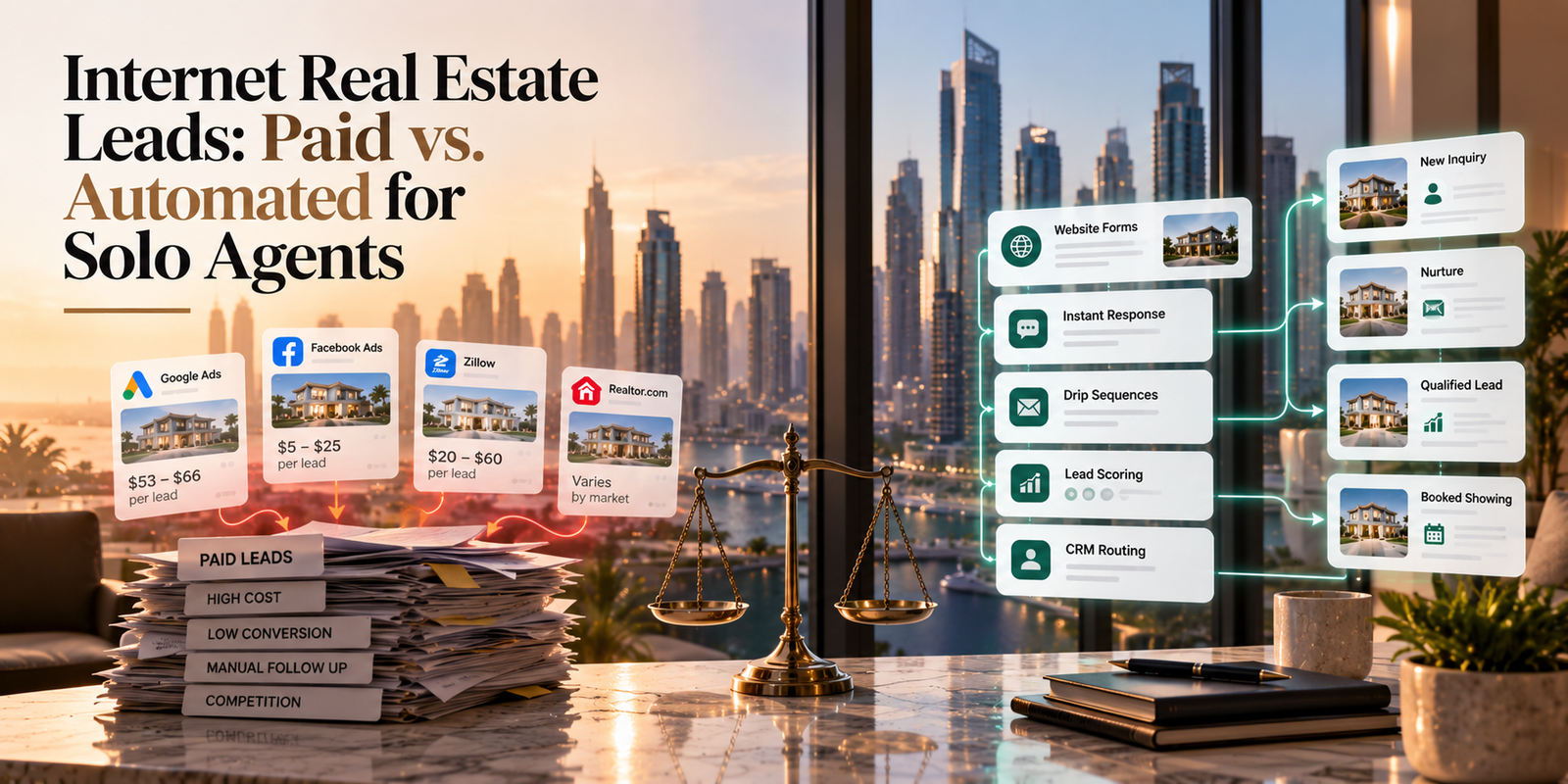
Internet Real Estate Leads: Paid vs. Automated for Solo Agents
You are running a one-person operation. Every lead source has to earn its place in your week, not just your spreadsheet. The real question about internet real estate leads is not which type is better in theory. It is which one you can actually convert given your cash flow, your response capacity, and how much…
Stop Reading. Start Shipping.
You didn't start a business to run a team. Hire your first AI Worker instead.