
Best Lead Generation for Realtors: Stop Overpaying
Two agents. Same zip code. Same lead source. One closes deals. One bleeds money. The difference is almost never the leads themselves. Most realtors treat lead generation as a volume problem. Buy more leads, close more deals. That logic sounds reasonable until you’re spending $1,500 a month on Zillow and booking two appointments that both…
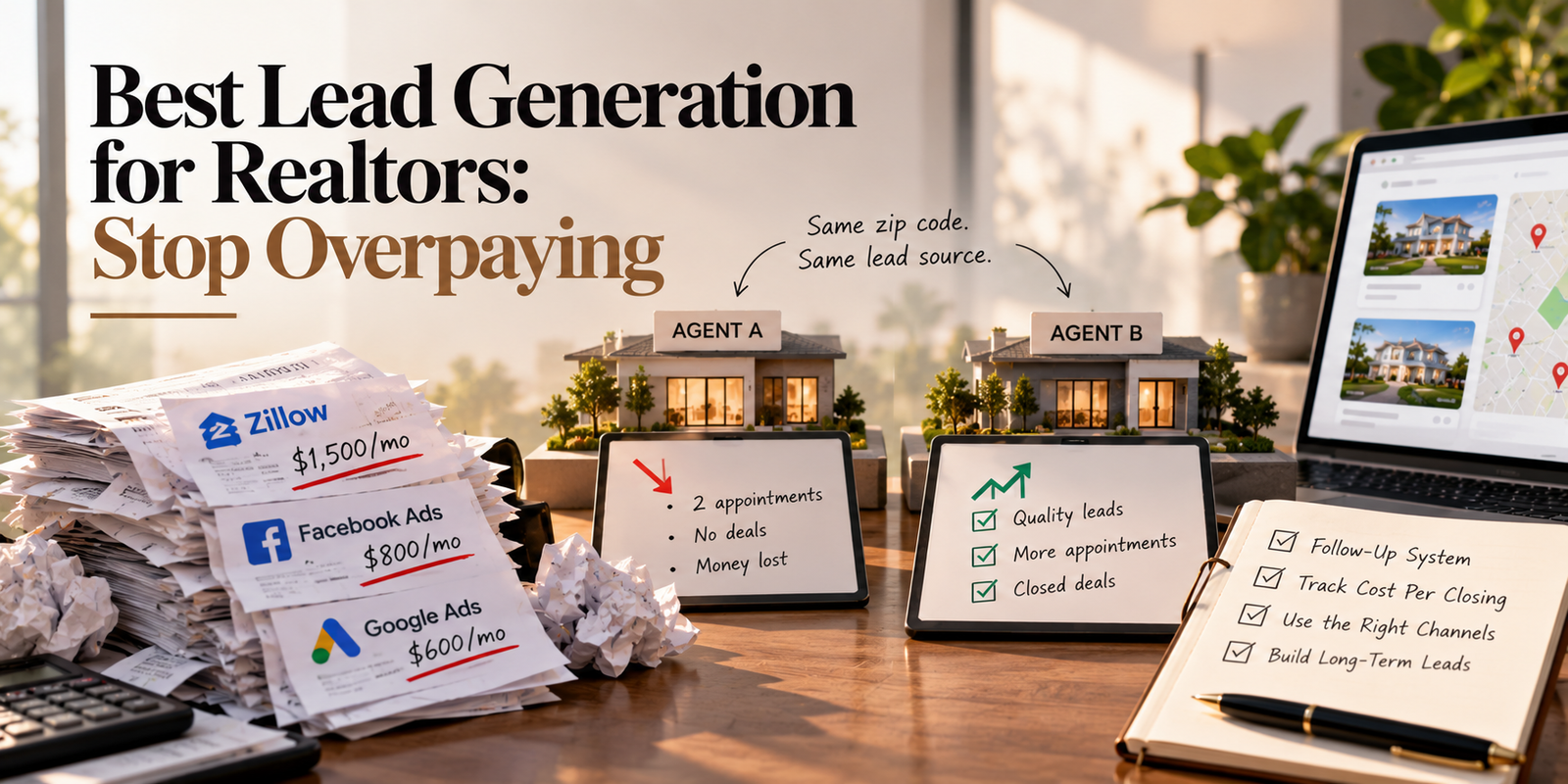
Two agents. Same zip code. Same lead source.
One closes deals. One bleeds money. The difference is almost never the leads themselves.
Most realtors treat lead generation as a volume problem. Buy more leads, close more deals.
That logic sounds reasonable until you’re spending $1,500 a month on Zillow and booking two appointments that both ghost you. Then the math gets uncomfortable fast.
Here is what the numbers actually look like — and where most agents get taken.
What You Should Be Paying, by Channel
Facebook and Meta ads are the entry point for most agents. A reasonable cost per lead runs $5 to $30. You can push volume here cheaply, but the intent is low.
These are people who saw an ad between scrolling vacation photos and recipes. They raised their hand, but barely.
Google search ads cost more — $50 to $150 per lead, sometimes higher in competitive markets. The intent is real.
Someone typed “homes for sale in [city]” and clicked your ad. That is worth paying for, if your follow-up is actually ready to handle it.
Portal leads from Zillow or Realtor.com typically land somewhere between $20 and $100 per lead, but that range disguises a lot. Shared leads in a competitive zip code can quietly become your most expensive per-closing spend, because you are competing with three other agents the moment the lead submits their info.
SEO and content marketing look expensive at the start because you are paying for work before you see traffic. Once rankings mature, cost per lead can fall to $7 to $30 — and it compounds. A blog post ranking today keeps generating leads in two years without another dollar spent.
Expired listings and FSBOs sit at the cheap end on paper. Data costs run $1 to $3 per record.
Agents who actually work these channels report closing costs around $300 to $500 per transaction. The catch is it requires consistent outreach, not just a list purchase.
The Four Ways Agents Overpay
Expensive leads are not the problem. Bad systems make average leads look expensive. Here is where the money actually disappears.
First: buying leads before you have follow-up capacity. A lead that does not get contacted within minutes is a lead that is already calling someone else.
Speed to contact is not a nice-to-have — it is a conversion variable. If your CRM is a spreadsheet and your follow-up is a phone call you get to eventually, your $20 leads are effectively worthless.
Second: paying for shared leads and treating them like exclusive ones. Shared leads are cheaper on the sticker, but you are splitting that lead’s attention with other agents from the moment they click submit. The effective cost per closed deal is often higher than buying fewer exclusive leads at a higher upfront price.
Third: chasing the channels that feel like momentum. Google PPC and portal subscriptions generate notifications and dashboards and activity.
That activity is not revenue. Agents who spend heavily here without tracking cost per closing often discover they have been paying a lot for the feeling of lead generation rather than the output of it.
Fourth: ignoring the math that compounds. Referrals cost almost nothing once your client base is active.
SEO traffic is not free, but it does not reset to zero every time you stop paying. Agents who allocate the bulk of their budget to paid channels and skip content and referral systems are rebuilding from scratch every quarter.
The Budget Rule That Most Agents Apply Wrong
The common guidance is to spend 10% of income on marketing, sometimes stretched to 10% to 20% of gross commission income. That percentage is not wrong. How agents spend it usually is.
Spending 15% of your GCI on leads and zero on a system to convert those leads is like filling a bucket with a hole in the bottom. The percentage looks responsible. The output does not.
A newer agent generating $80,000 GCI has about $8,000 to $16,000 to work with annually. If all of that goes to lead purchases and none of it goes to automated follow-up, a CRM that actually runs sequences, or content that builds long-term visibility, they will need to spend that same budget again next year to get the same results.
Nothing compounds.
What the Same $500 Looks Like Across Two Channels
Take $500 and put it into Facebook ads at an average of $20 per lead. You get 25 leads.
If your contact rate is 40% and your appointment conversion is 20% of those you reach, you end up with two appointments. At a 50% close rate, that is one potential closing — but only if your follow-up sequence actually runs.
Put that same $500 into expired listing data at $2 per record and a dialer or email sequence. You reach 250 records.
Expired sellers are motivated by definition; they already tried to sell and failed. Conversion rates vary, but the cost per closed transaction in this channel consistently ranks among the lowest available to any agent willing to do the work or automate it.
The point is not that one channel is always better. The point is that $500 produces radically different outcomes depending on intent level, follow-up execution, and whether you are tracking the number that actually matters: cost per closing, not cost per lead.
Ask a Better Question
Stop asking what a lead costs. Start asking what a closed transaction costs, by channel, over the last 12 months. That single number will tell you more than any lead platform’s pitch deck.
If you do not have that number, you are flying blind — and the lead platforms know it. They sell on cost per lead because cost per closing is where their economics fall apart for most buyers.
Cost per qualified appointment. Cost per signed buyer or seller agreement. Cost per closed transaction.
Time to ROI. These are the numbers that tell you whether you are building a business or funding someone else’s.
A Practical Starting Point
For agents who are newer or mid-level and building toward a real pipeline, the allocation that holds up over time looks something like this: use low-cost social leads to build volume and practice your follow-up process. Use search or portal leads selectively for higher-intent buyers and sellers when you have a system ready to handle them.
Invest in SEO and content for compounding returns that do not reset every billing cycle. Track your closing rate by source, not your lead count overall.
The agents overpaying are not always buying from the wrong places. They are buying the right leads and delivering them into a process that cannot convert. That is a systems problem, not a lead problem.
The best lead generation for realtors is not the cheapest. It is the one where cost, intent, exclusivity, and your own follow-up capacity are actually aligned.
| Lead Source | Typical Cost Per Lead | Intent Level | Compounds Over Time? |
|---|---|---|---|
| Facebook / Meta Ads | $5 – $30 | Low | No |
| Google Search Ads | $50 – $150+ | High | No |
| Zillow / Realtor.com Portals | $20 – $100+ | Medium – High | No |
| SEO / Content Marketing | $7 – $30 (at maturity) | Medium – High | Yes |
| Expired Listings / FSBOs | $1 – $3 per record | High (if worked) | Partial |
| Referrals | Near zero marginal cost | Very High | Yes |
Keep reading: Best Lead Generation for Real Estate: What Works vs. Hype · Best Lead Generation for Realtors: Solo Agent Checklist
Frequently Asked Questions
What is a realistic cost per lead for realtors in 2025?
It depends heavily on the channel. Facebook and Meta ads typically run $5 to $30 per lead. Google search ads cost $50 to $150 or more. Portal leads from Zillow or Realtor.com often land between $20 and $100, though competitive markets push that higher. SEO-generated leads can fall as low as $7 to $30 once content ranks and traffic matures.
Why do some agents get better ROI from the same leads?
Speed to contact and follow-up consistency are the main variables. An agent with automated follow-up sequences, a working CRM, and a fast response process will convert a higher percentage of the same leads than an agent relying on manual outreach. The lead itself is often less important than what happens in the first 5 to 30 minutes after it comes in.
Are shared leads worth buying?
Shared leads carry more risk than they appear. The sticker price looks lower, but you are competing with other agents from the moment the lead submits. In practice, cost per closing on shared leads is often higher than exclusive leads because conversion rates drop when buyers or sellers are simultaneously contacted by multiple agents.
How much of their income should realtors spend on lead generation?
A common benchmark is 10% to 20% of gross commission income. The percentage matters less than how it is allocated. Spending the entire budget on lead purchases without investing in follow-up systems, content, or a CRM tends to produce results that reset to zero every year rather than compounding.
What is the best long-term lead generation strategy for realtors?
The channels that compound over time consistently outperform purely paid sources. SEO-driven content, referral systems, and a strong email nurture process all produce results that grow with investment rather than stopping when the budget stops. Paid channels like Google Ads and portals work well when combined with a conversion system, but should not be the only strategy.
How 1TeamLabs Can Solve It
1TeamLabs’ Sales Automation AI Worker handles outbound prospecting and follow-up sequences end-to-end, so leads that would otherwise go cold get contacted, nurtured, and moved toward booked appointments without you managing the process manually.
See What a Real Follow-Up System Looks Like
If you want to stop buying leads that stall in your inbox, 1TeamLabs can walk you through how the Sales Automation AI Worker handles outreach and pipeline from first contact to booked appointment.
Book a Demo
About the Author
Written by the 1TeamLabs team, builders of AI Workers that own entire business functions so solopreneurs and small teams stop stitching tools together and start getting full-function outputs.

Best Lead Generation for Realtors: Solo Agent Checklist
Most lead generation platforms are built to impress on a sales call. They talk about lead volume, market coverage, and proprietary data. What they do not tell you upfront is whether those leads are shared with four other agents, whether you need a separate CRM to do anything useful with them, or what the total…
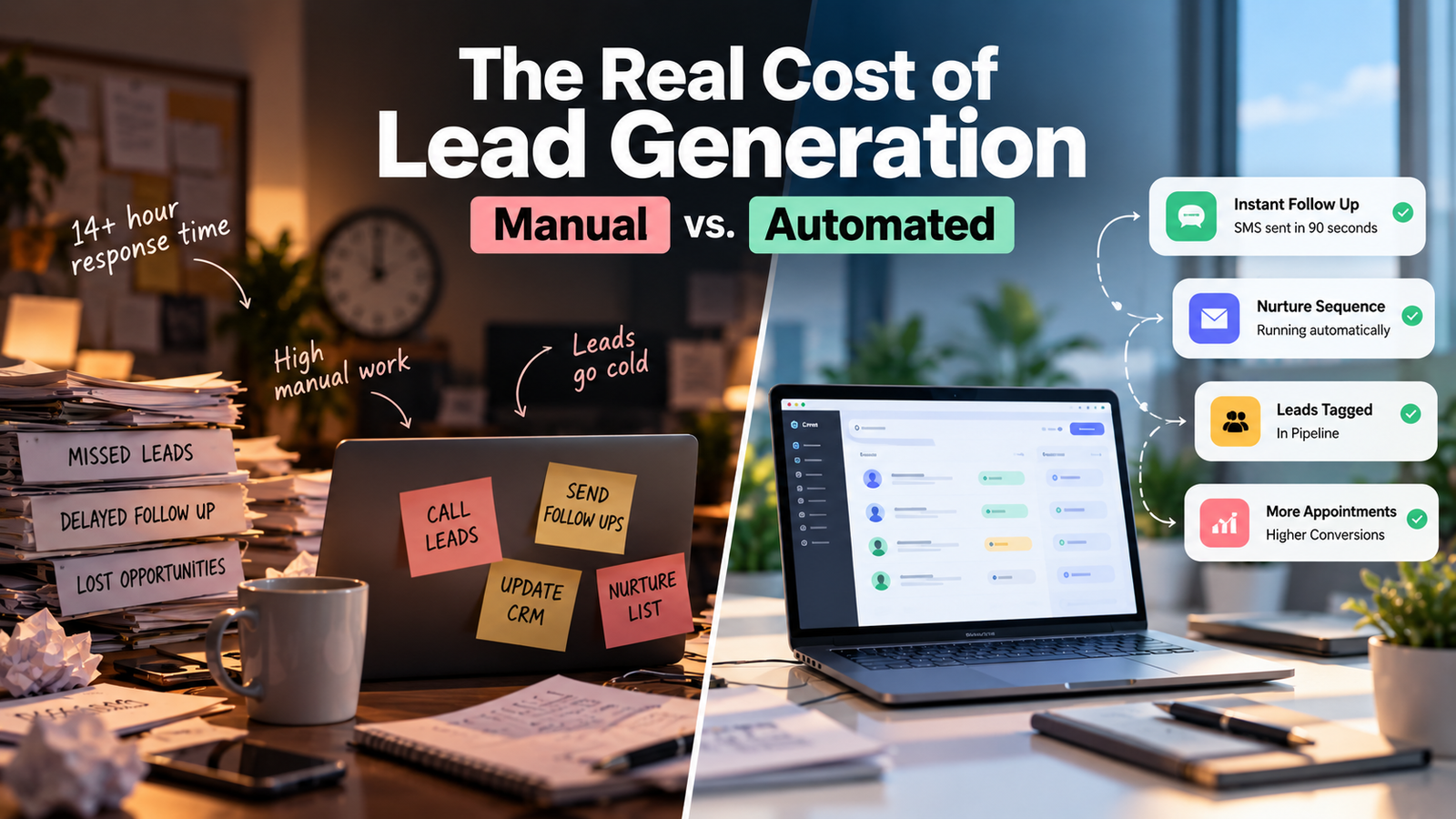
Best Lead Generation for Real Estate: Manual vs. Automated
You are probably spending more on lead generation than your spreadsheet shows. The line items are easy to count — ad spend, a VA, maybe a CRM subscription. What does not show up is the cost of a 14-hour response time, a nurture sequence that never gets sent, and a database of old contacts nobody…
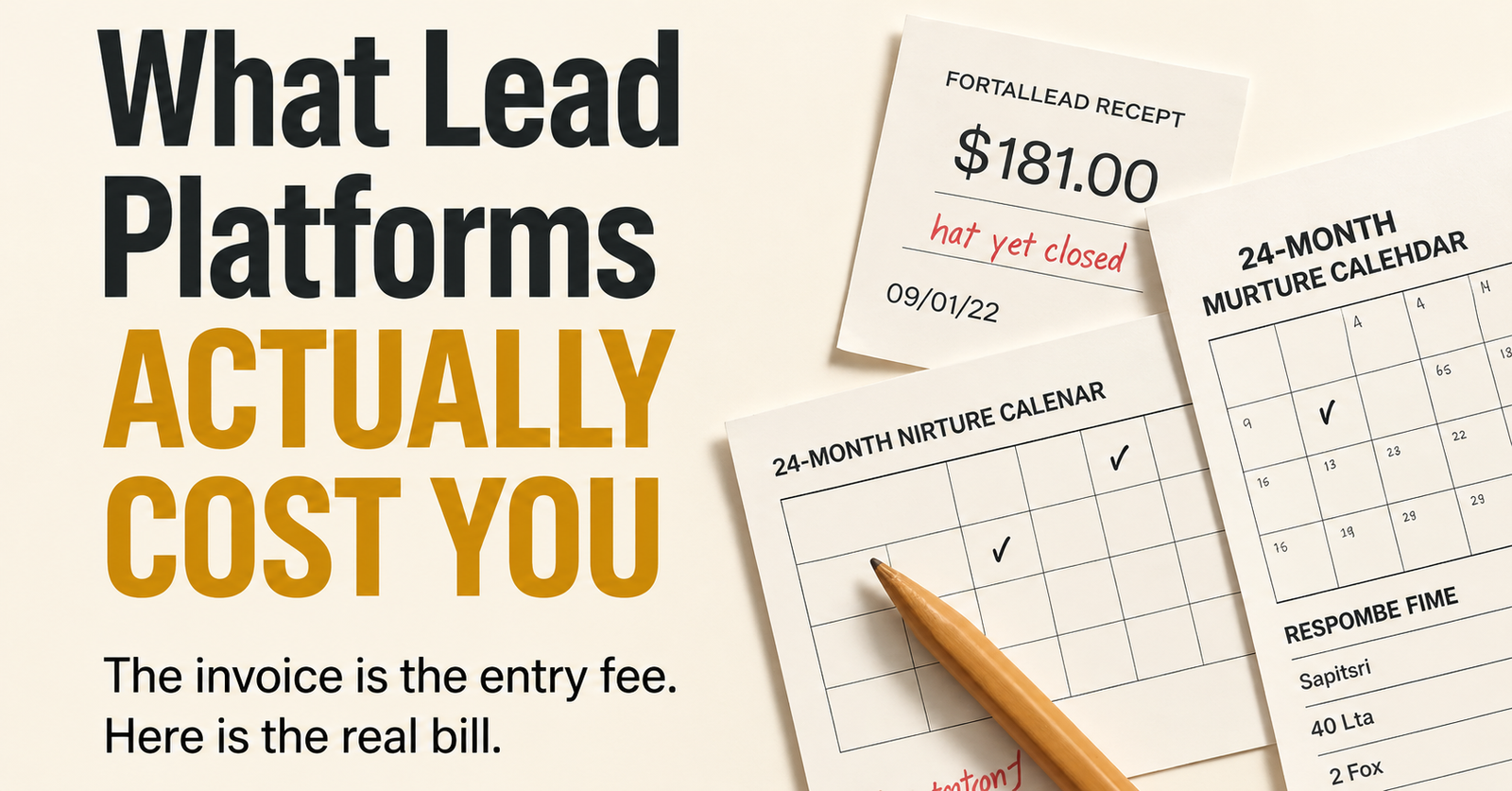
The Real Cost of Real Estate Lead Generation Platforms vs. Automating the Role Entirely
The invoice is not the cost. That is the first thing agents get wrong about real estate lead generation platforms. You pay $299 a month for the platform. Then you pay for the ad spend that feeds it. Then you pay in hours spent logging in, following up, and re-engaging leads who went quiet two…
Stop Reading. Start Shipping.
You didn't start a business to run a team. Hire your first AI Worker instead.