
Best Lead Generation for Realtors: Go Automated
You already know where the time goes. You are calling leads who won’t pick up, logging notes into a spreadsheet, manually texting people who filled out a form three days ago, and wondering which open house sign-in actually turned into a conversation worth having. That is not a prospecting problem. That is a process problem.…
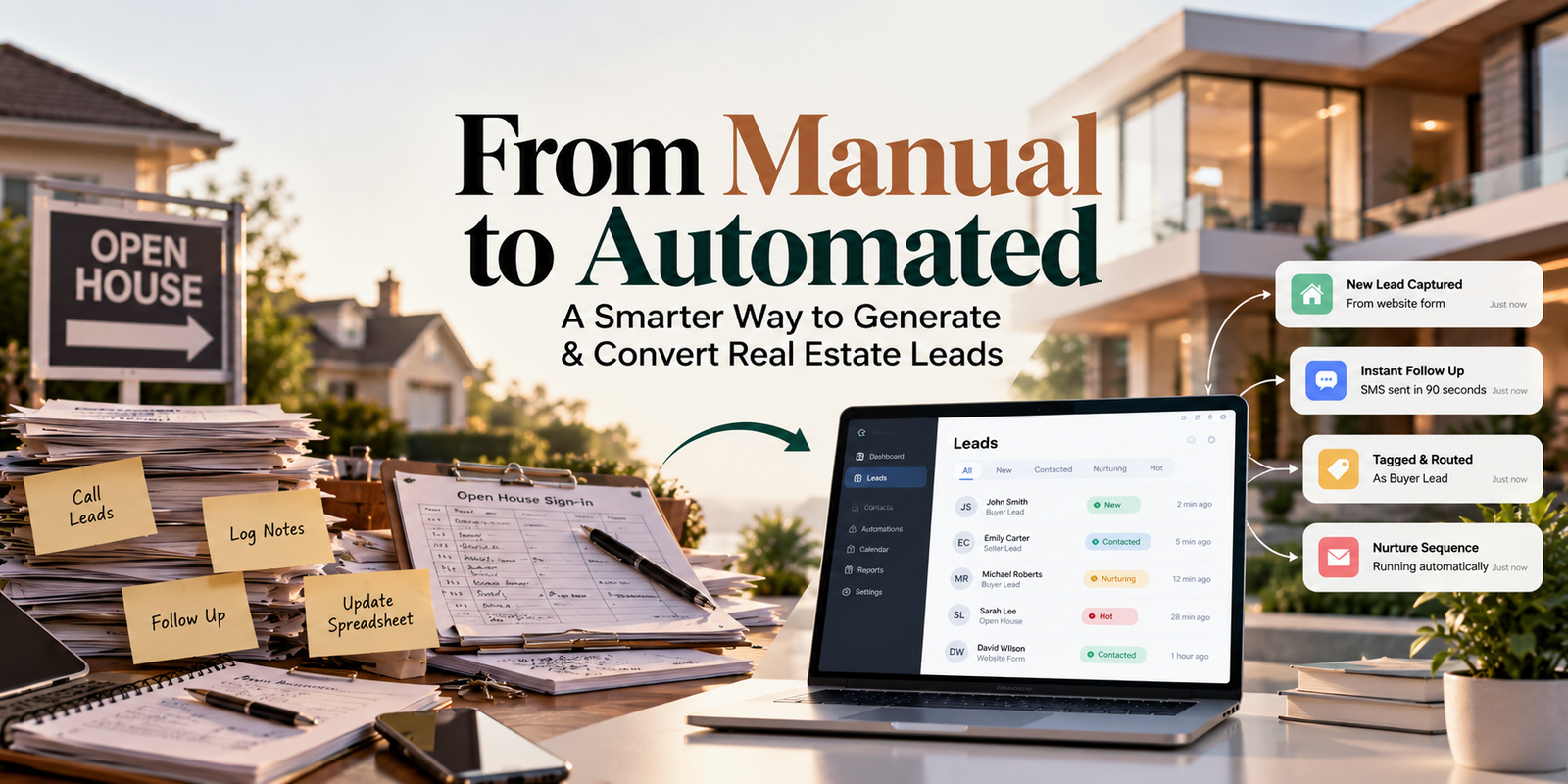
You already know where the time goes. You are calling leads who won’t pick up, logging notes into a spreadsheet, manually texting people who filled out a form three days ago, and wondering which open house sign-in actually turned into a conversation worth having.
That is not a prospecting problem. That is a process problem.
The realtors who close consistently aren’t working harder on outreach. They’ve built a system that handles capture, routing, and follow-up so they can spend their actual hours on clients who are ready to move.
Here’s how to make that switch.
Why Manual Prospecting Has a Ceiling
Manual prospecting depends entirely on your memory, your energy, and your schedule. When leads come in from five different sources simultaneously, something gets dropped.
Response time slips. A follow-up that should happen on day three happens on day nine, if it happens at all.
Speed-to-lead is one of the highest-leverage variables in real estate conversion. A prospect who fills out a form at 7pm on a Tuesday is looking at properties right now. If your first contact happens the next morning during your commute, you are already competing against whoever did respond last night.
Automation closes that gap. Not partially. Completely.
What You Are Actually Building
An automated lead generation system is not a single tool. It is a connected sequence: a lead lands somewhere, gets captured into a CRM automatically, receives an instant response, gets tagged by source and intent, and enters a follow-up sequence built for their specific situation. None of that requires you to notice the inquiry first.
The four components that have to work together are lead capture, CRM routing, instant response, and nurture sequencing. If any one of those is manual, the system has a hole in it.
Most solo operators and small teams have one or two of these running. The bottleneck is almost always in routing and follow-up, where the human is still the connective tissue between steps.
Step One: Map What Is Actually Happening Now
Before you change anything, document where leads currently enter. Referrals, portal inquiries, paid ad forms, open house sign-ins, Instagram DMs, your website contact form. Every source.
Then map what happens next, specifically. Who sees it first, how fast, where it gets recorded, and what the first outreach looks like. You will find manual steps you forgot were manual, because you have been doing them so long they feel automatic.
That audit tells you exactly where automation replaces friction. It is usually data entry, reminder setting, and initial response messaging.
All three are straightforward to automate. None of them require human judgment.
Step Two: Pick One System as the Hub
The most common mistake is running capture in one place, leads in another, follow-up in a third, and reporting nowhere. You end up with more tools than you started with and still doing manual reconciliation between them.
Pick a single CRM or lead platform that handles capture, routing, and nurture sequencing in one environment. The specific tool matters less than the principle: one place where every lead lives, from first touch to closed deal.
Every ad, landing page, listing, and form should feed directly into that system. If something creates a manual spreadsheet entry instead, it does not belong in the stack.
Step Three: Build Automated Capture Paths
Replace passive contact methods with active capture. An IDX page with a lead gate, a Facebook lead ad that writes directly to your CRM, a listing page with a booking link, a seller valuation tool that captures contact details before delivering the report.
Each of those touchpoints should create a CRM contact automatically, tag it with source and initial intent, and trigger the first response within minutes. That response doesn’t need to be a phone call.
A text that says “Got your inquiry on 42 Maple Street, I’ll send you comparable listings shortly” is enough to hold the prospect’s attention until you can engage properly.
The goal is zero manual steps between a prospect showing interest and that prospect being inside your system with a follow-up sequence running.
Step Four: Sequence Differently by Lead Type
Not every lead is ready to transact this month. A first-time buyer browsing listings in January might be a realistic client by April.
A seller who requested a valuation three weeks ago may already be interviewing agents. Sending the same message to both of them is how you lose both of them.
Build distinct sequences for buyer leads, seller leads, and long-term nurture contacts. A new buyer lead gets an immediate response, auto-matched property alerts, and a booking link.
A seller lead gets a market update, a valuation prompt, and a follow-up reminder. A long-term lead gets a monthly market report and stays in your retargeting audiences until their timeline shifts.
This is where most automated systems pay for themselves. Consistent, segmented nurturing over a six-month window converts leads that manual follow-up would have abandoned after week two.
Step Five: Use Engagement Data to Prioritize
Once leads are in the system, their behavior tells you who deserves your personal attention right now. A prospect who has visited eight listings, opened four emails, and clicked a showing request link twice is not the same as someone who filled out a form once and never engaged again.
Most modern CRMs track this and can alert you or re-route a lead when engagement spikes. That means your time goes toward conversations that are already warm, not toward manually deciding who to call next based on gut feel.
High-intent signals, not recency, should drive your personal outreach. The system handles everyone else.
What to Measure Once It Is Running
Volume is not the metric that matters. Response time, stage progression, and source-to-close conversion rate are. If you know that Facebook leads convert at three times the rate of portal leads but you are spending equal time on both, you can shift budget and attention accordingly.
Your CRM should show you this data without you building a report by hand. If it doesn’t, the system isn’t finished yet.
An automated lead generation system that runs cleanly will show you, within 60 to 90 days, which sources are producing closings and which are producing noise. That clarity alone is worth more than any individual lead it generates.
The Honest Trade-Off
Setting this up takes real work upfront. You are mapping a process, choosing a hub, building sequences, and connecting sources. That is not an afternoon project.
But you do it once. After that, the system runs the follow-up, and you run the relationships.
That is the actual job. Every hour you spend manually logging a lead or sending a check-in text is an hour you are not spending on the parts of this business that require a human.
| Approach | Response Speed | Follow-Up Consistency | Scales Without More Hours | Conversion Visibility |
|---|---|---|---|---|
| Manual Prospecting | Hours to days | Depends on memory | No | Little to none |
| Point-Solution Tools | Faster capture, still manual follow-up | Partial | Partially | Fragmented |
| Automated End-to-End System | Minutes | Runs without you | Yes | Source-to-close reporting |
| AI Worker (Sales Automation) | Immediate | Fully autonomous | Yes | Full-funnel, no human stitching required |
Keep reading: Best Lead Generation for Realtors: Stop Overpaying · Best Lead Generation for Real Estate: What Works vs. Hype
Frequently Asked Questions
What is the best lead generation system for realtors who work alone?
A system where every lead source feeds one CRM automatically, instant responses go out without manual action, and follow-up sequences run by lead type without you deciding when to reach out. The specific platform matters less than whether those three functions are actually connected.
How long does it take to set up an automated real estate lead generation system?
Realistically, two to four weeks to map your current process, pick a hub, connect your lead sources, and build basic sequences. Most solo operators underestimate the upfront time and overestimate the ongoing maintenance once it is running.
Can automated systems replace personal outreach entirely?
No, and that is not the goal. Automation handles capture, routing, instant response, and long-term nurturing. Personal outreach is for leads who have shown real intent. The system filters and warms them so your conversations are with people who are actually ready to move.
What is the biggest mistake realtors make when switching to automation?
Keeping lead capture and CRM separate. When a form submission creates a spreadsheet row instead of a CRM contact, manual entry is still required, and the whole purpose of automation is defeated. Every capture point has to write directly to the system.
How do I know if my automated system is actually working?
Track response time, lead stage progression, and source-to-close conversion rate. If your CRM cannot show you which sources are producing closings, the system is not finished. Volume of leads is not the signal that matters.
How 1TeamLabs Can Solve It
1TeamLabs’ Sales Automation AI Worker owns the outbound and follow-up function end-to-end: it captures inbound leads, runs segmented sequences, and books meetings without waiting for a human to notice the inquiry or decide who to contact next.
See What a Sales AI Worker Does With Your Pipeline
If you are ready to stop being the connective tissue between your tools, 1TeamLabs can walk you through how a Sales Automation AI Worker takes over the function entirely. One conversation is enough to know whether it fits.
Book a Demo
About the Author
Written by the 1TeamLabs team, builders of AI Workers that own entire business functions so solo operators and small teams don’t have to.
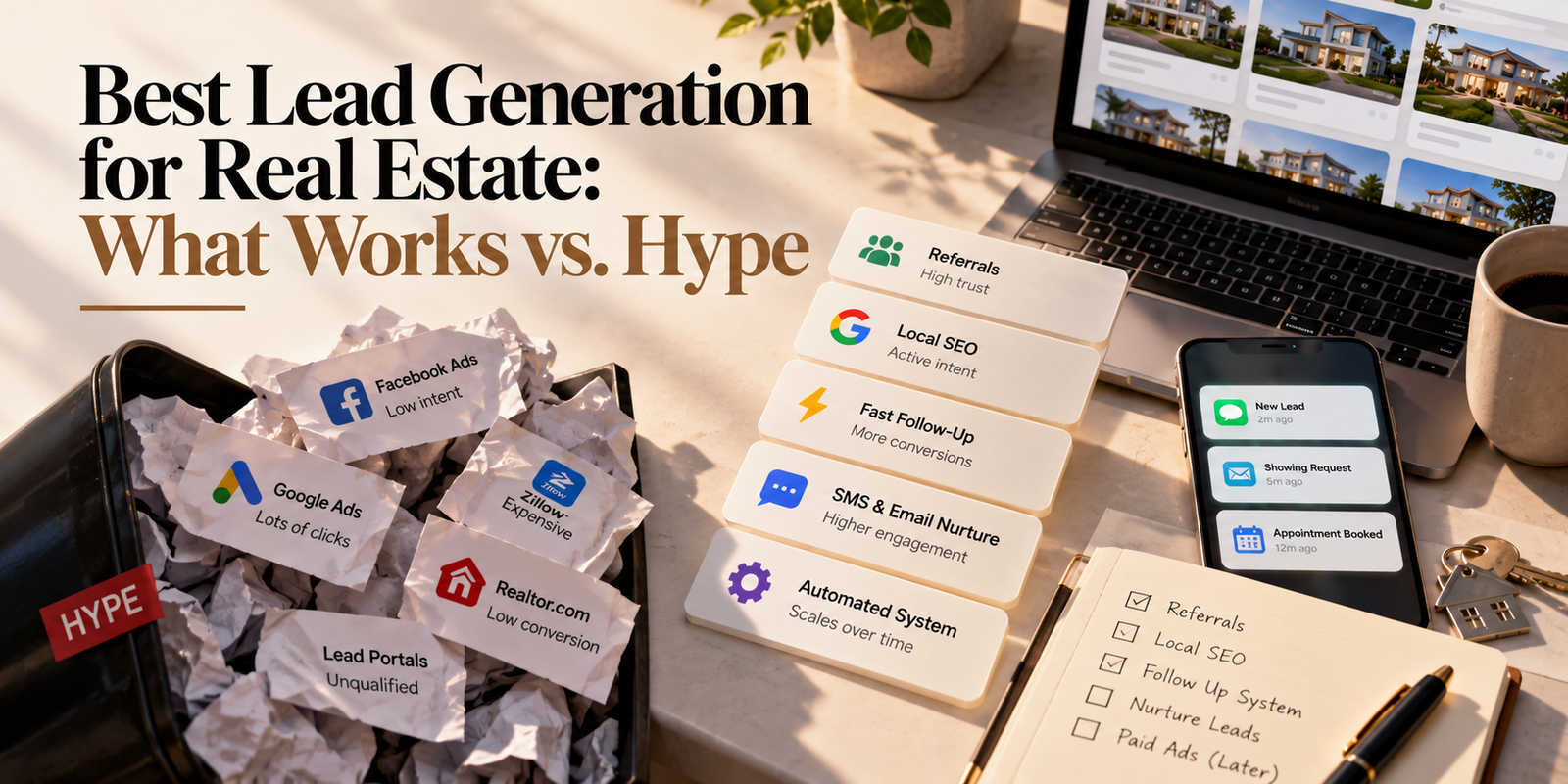
Best Lead Generation for Real Estate: What Works vs. Hype
A lot of real estate lead generation advice sounds impressive until you ask one question: does it produce people who actually want to buy or sell, and can you convert them at a margin that makes sense? The answer, for most of what agencies sell, is no. The gap between what works and what gets…
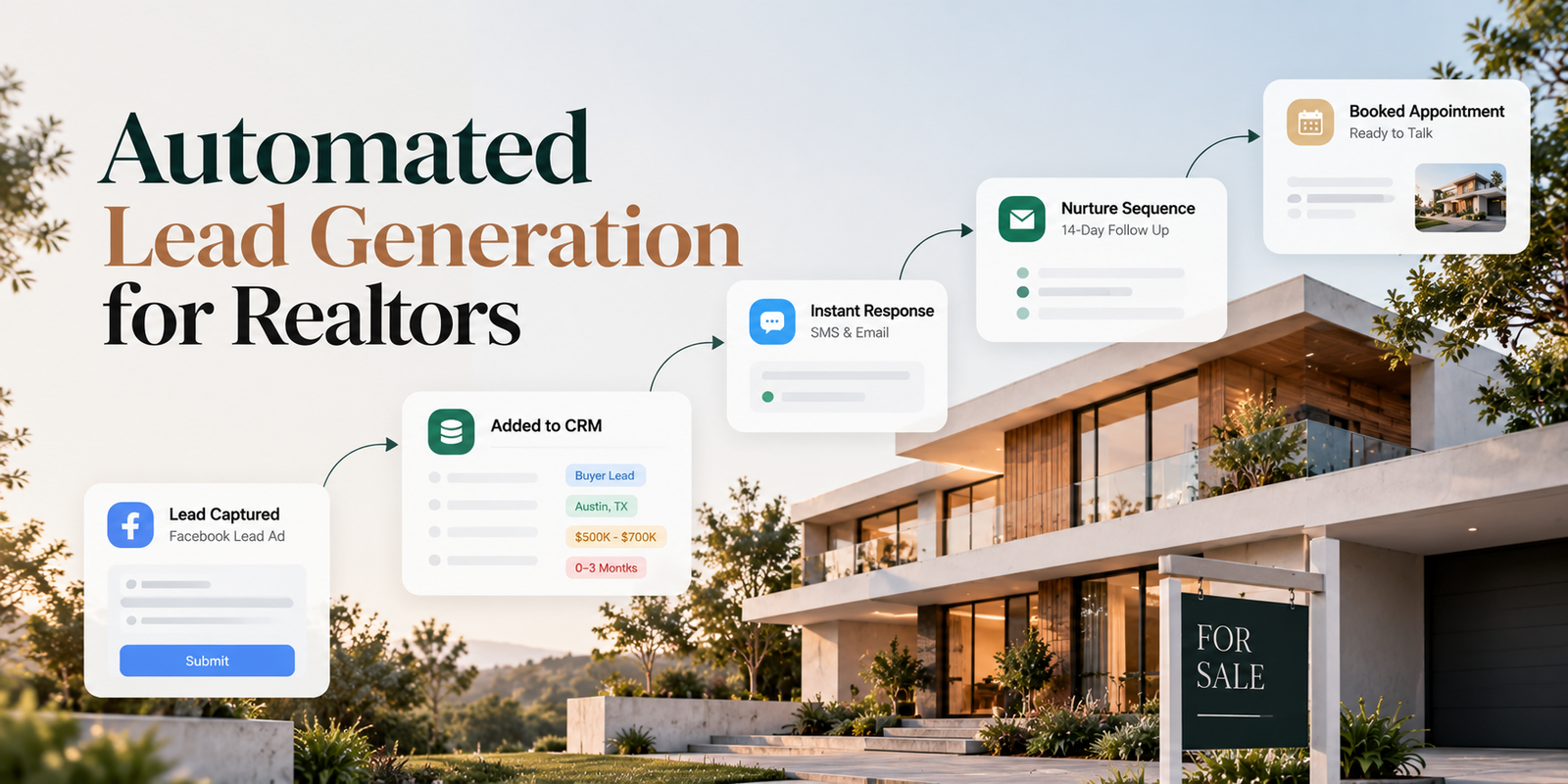
Best Lead Generation for Realtors Without a VA or Agency
Most realtors lose leads the same way. A form submission comes in at 2 PM on a Tuesday when you’re walking a client through a house. You see it four hours later. By then, three other agents have already replied. The fix is not hiring a VA to babysit your inbox. It’s building a system…

Best Lead Generation for Realtors: Solo Agent Checklist
Most lead generation platforms are built to impress on a sales call. They talk about lead volume, market coverage, and proprietary data. What they do not tell you upfront is whether those leads are shared with four other agents, whether you need a separate CRM to do anything useful with them, or what the total…
Stop Reading. Start Shipping.
You didn't start a business to run a team. Hire your first AI Worker instead.