
Best Lead Generation for Realtors Without a VA or Agency
Most realtors lose leads the same way. A form submission comes in at 2 PM on a Tuesday when you’re walking a client through a house. You see it four hours later. By then, three other agents have already replied. The fix is not hiring a VA to babysit your inbox. It’s building a system…
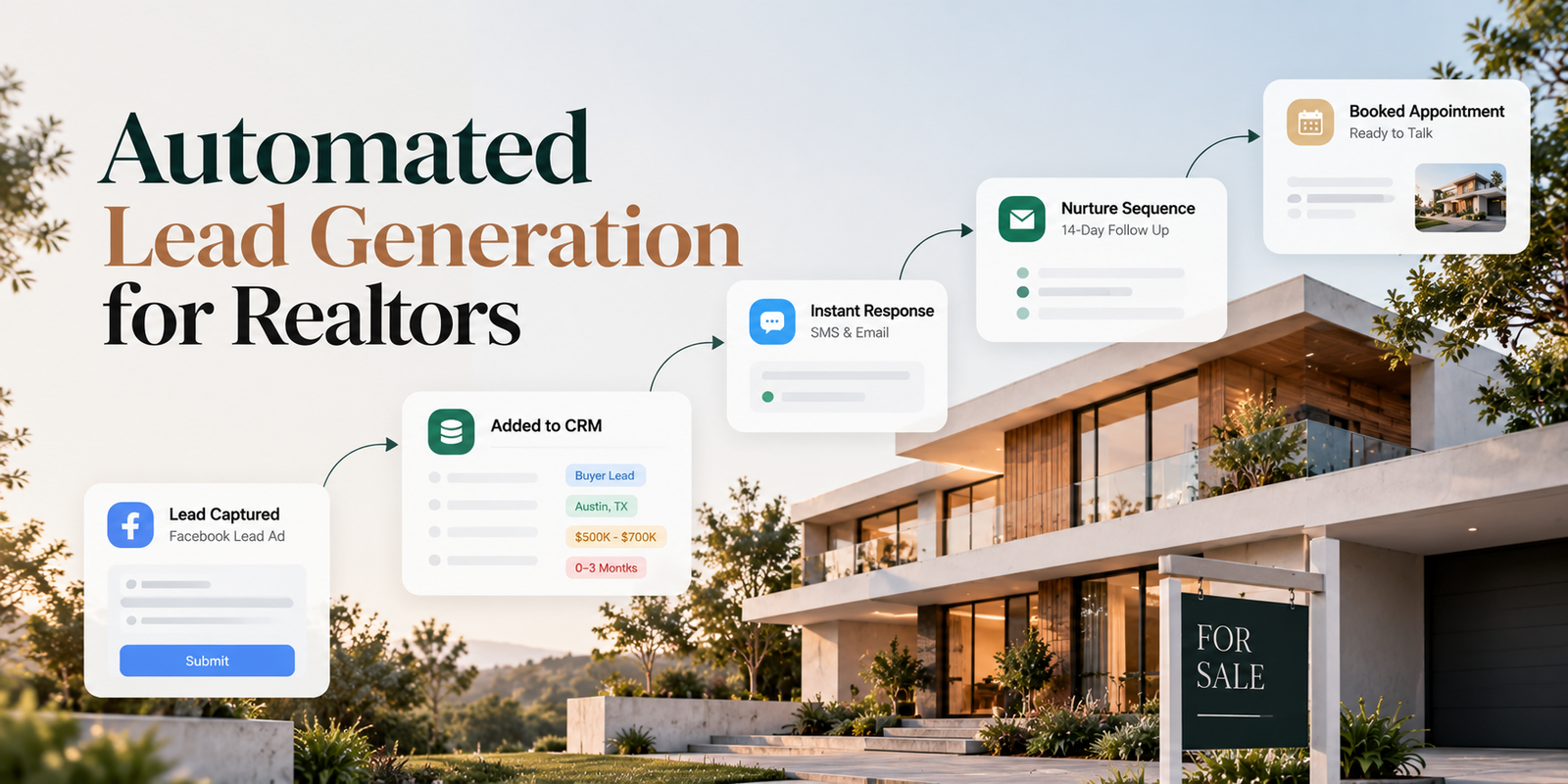
Most realtors lose leads the same way. A form submission comes in at 2 PM on a Tuesday when you’re walking a client through a house.
You see it four hours later. By then, three other agents have already replied.
The fix is not hiring a VA to babysit your inbox. It’s building a system that responds instantly, routes intelligently, and follows up automatically — while you stay focused on actual clients.
Here is how to set that up from scratch, without an agency and without adding headcount.
Start With One Lead Source, Not Five
The most common mistake is building five funnels at once before any of them work. Pick one source and systemize it completely before you add another.
The fastest options to stand up are Facebook Lead Ads connected directly to a CRM, a seller valuation page (the “what’s my home worth” funnel), or a simple listing inquiry form on your existing website. One page.
One offer. One place for contacts to land.
Your landing page should do one job: collect enough information to qualify the lead and start follow-up. A name, email, phone number, buyer or seller status, and a rough timeline.
That’s it. Don’t make the form longer than it needs to be — every extra field cuts your conversion rate.
Connect the Form Directly to Your CRM
If a lead hits your form and lands in a spreadsheet, or worse, an email notification you have to manually process, you’ve already broken the system. Every form submission should push to your CRM in real time with no human step in between.
Tag each record at the point of capture. Source, buyer or seller, zip code, price range if you asked for it. These tags drive every automated action that comes next, so getting them right from the start matters.
A CRM with built-in automation handles this cleanly. Some real estate platforms like Wise Agent and Real Geeks are built specifically for this workflow — lead capture, CRM sync, and follow-up in one place.
If you’re using a general-purpose CRM, you’ll need a bridge tool to connect your form. Either works; the key is that no human touches the data between submission and CRM entry.
Automate the First Response in Under Five Minutes
Speed is the whole game at this stage. A lead who submits a form and hears nothing for two hours is already looking at the next agent. Your system should send a text within minutes of submission, automatically, without you doing anything.
A simple first-response sequence: an immediate SMS that opens a conversation, an email confirmation with a clear next step, and a follow-up text the next morning if there’s no reply. Three touches in 24 hours, none of them manual.
The message doesn’t need to be clever. It needs to be fast and specific.
Reference what they submitted — “saw you’re looking in the 78704 zip” — rather than sending a generic greeting that reads like a mass blast. Personalization at this stage is just using the data they gave you.
Build a 14-Day Nurture Sequence Before You Need It
Most leads are not ready to transact this week. That doesn’t make them worthless. It makes them a pipeline problem, and the solution is a nurture sequence that runs without you.
For buyers, that sequence can include new listings matching their stated criteria, a weekly market update for their target area, and a booking link for a call when they’re ready. For sellers, it’s valuation follow-ups, neighborhood activity, and gentle timing reminders.
Fourteen days of consistent, automated contact is enough to establish presence without overwhelming people. You can extend it later. Start with 14 days, get it live, and measure reply rates before you build something more elaborate.
A Concrete Example: The Seller Valuation Funnel
A seller valuation page is one of the highest-converting single-page funnels in residential real estate. The offer is simple: a homeowner enters their address and gets an estimated value. Your form captures their contact details in the process.
The automated sequence that follows is specific to their situation. Day one: an SMS confirming their valuation request and a question about their timeline. Day two: an email with neighborhood comps and a calendar link to discuss listing strategy.
Day seven: a follow-up referencing local market activity in their zip code. None of this requires you to remember who submitted what — the CRM tags them as a seller lead at capture and the sequence fires from there.
This is a closed loop. Traffic goes to the page, the page captures the lead, the CRM stores and tags it, and the automation runs. You show up when someone replies or books a call.
Add Lead Scoring So You Know Who Deserves Your Attention
Not every lead is equal. Someone who opened three emails, clicked a listing, and visited your site twice this week is a different conversation than someone who filled out a form six days ago and has been silent since.
Set scoring rules based on engagement signals your CRM can track — email opens, link clicks, form resubmissions, site visits if your CRM supports it. High-score leads get a personal call.
Low-score leads stay in the automated sequence. This is how you prioritize without guessing.
Routing works the same way. If you’re running a team, even a small one, you can route leads by zip code, buyer vs. seller status, or price point. The lead goes to the right person immediately, not after someone checks a shared inbox.
Measure the Right Things Weekly
Automation that you don’t measure is just noise you’ve offloaded to a machine. Check five numbers every week: lead source volume, response time average, reply rate to your first message, appointment booking rate, and closed deals by channel.
If your reply rate to the first SMS is low, the message is wrong. If appointments aren’t converting from a particular source, the lead quality from that source is probably off. These are fixable problems, but only if you’re looking at the data.
The goal is a system you can improve one variable at a time, not a black box that either works or doesn’t.
What This Replaces
A VA handling lead intake and follow-up costs you real money monthly, requires training, and creates a dependency on one person’s availability. An agency running your lead generation takes a retainer and hands you leads with no visibility into what’s actually happening upstream.
This setup — one source, one form, CRM sync, instant response, 14-day nurture, scoring rules, weekly review — is a system you own. It runs while you’re in showings.
It doesn’t take time off. And it doesn’t require you to manage a person on top of managing a business.
The best lead generation for realtors is not the platform with the most features. It’s the one you actually have running, connected end to end, with no manual steps holding it together.
| Approach | Monthly Cost (Est.) | Response Speed | Runs Without You | You Own the System |
|---|---|---|---|---|
| Hire a VA | $800 – $2,000+ | Hours (depends on availability) | No | No |
| Pay an Agency | $1,500 – $5,000+ | Varies, often slow | Partially | No |
| Point-Solution Tools (stitched together) | $200 – $600+ | Fast if configured | Partially | Yes, but fragile |
| Automated AI Worker (1TeamLabs) | Fraction of agency cost | Minutes, 24/7 | Yes | Yes |
Keep reading: Best Lead Generation for Realtors: Stop Overpaying · Best Lead Generation for Real Estate: What Works vs. Hype
Frequently Asked Questions
What is the fastest automated lead generation setup for a solo realtor?
One Facebook Lead Ad or seller valuation page connected directly to a CRM with instant SMS and email response. That three-piece setup — traffic source, form, automated follow-up — is enough to stop losing leads to slow response times and can be live in a day or two.
Do I need a real estate-specific CRM or will a general one work?
Either works if it supports real-time form sync and automated workflows. Real estate-specific platforms like Wise Agent or Real Geeks have these built in, which reduces setup time. A general CRM like Pipedrive or HubSpot works fine if you’re willing to connect your form and configure the automation yourself.
How soon should I follow up with a new real estate lead?
Within five minutes. That is not an exaggeration — response speed is one of the strongest predictors of whether a lead converts or goes to a competing agent. Automated SMS within minutes of form submission is the standard worth building toward.
Can I run this without any technical knowledge?
Yes, with the right platform. Tools like Wise Agent and Real Geeks are designed for agents, not developers, and handle the CRM sync and automation without requiring custom code. If you use a general-purpose CRM, there’s more configuration involved, but it’s manageable without a technical background.
What’s the difference between automated lead generation and just buying leads?
Buying leads from a portal gives you a contact list with no control over quality, exclusivity, or follow-up timing. Building an automated system means you own the funnel — you control the source, the form, and every message that goes out. It’s slower to set up but produces a compounding asset rather than a recurring cost with no equity.
How 1TeamLabs Can Solve It
1TeamLabs rents AI Workers that own your sales automation function end to end — outbound, follow-up, and pipeline management — without you hiring, training, or managing anyone. One AI Worker handles the full cycle that a VA and a CRM stack would otherwise split between them.
See What an AI Worker Does With Your Lead Pipeline
If you want to see how 1TeamLabs handles sales automation as a complete function — not another tool to configure — a conversation with the team is the right next step.
Book a Demo
About the Author
Written by the 1TeamLabs team, builders of AI Workers that own full business functions so solopreneurs and small teams can stop stitching tools together and start getting outputs.
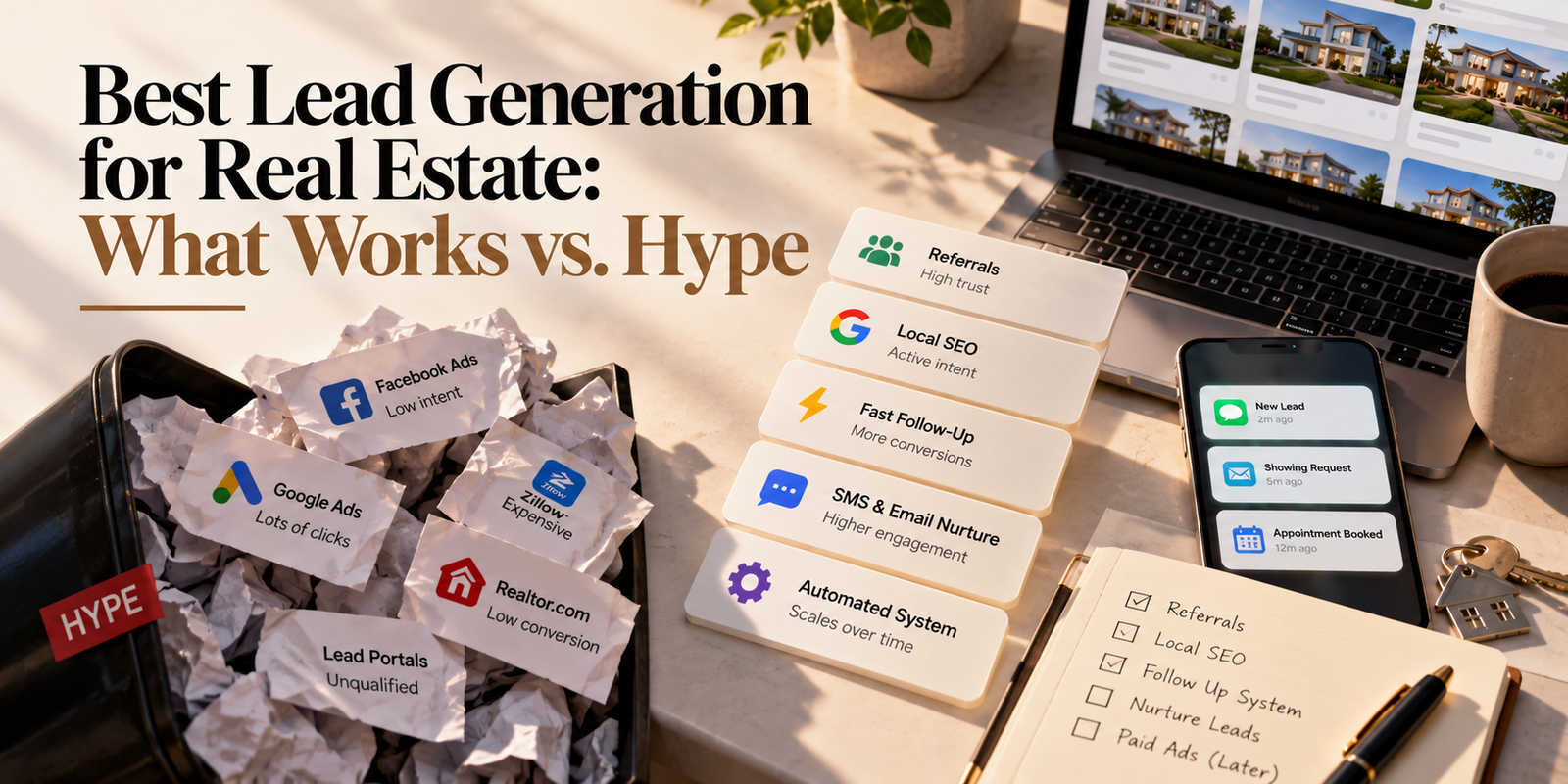
Best Lead Generation for Real Estate: What Works vs. Hype
A lot of real estate lead generation advice sounds impressive until you ask one question: does it produce people who actually want to buy or sell, and can you convert them at a margin that makes sense? The answer, for most of what agencies sell, is no. The gap between what works and what gets…
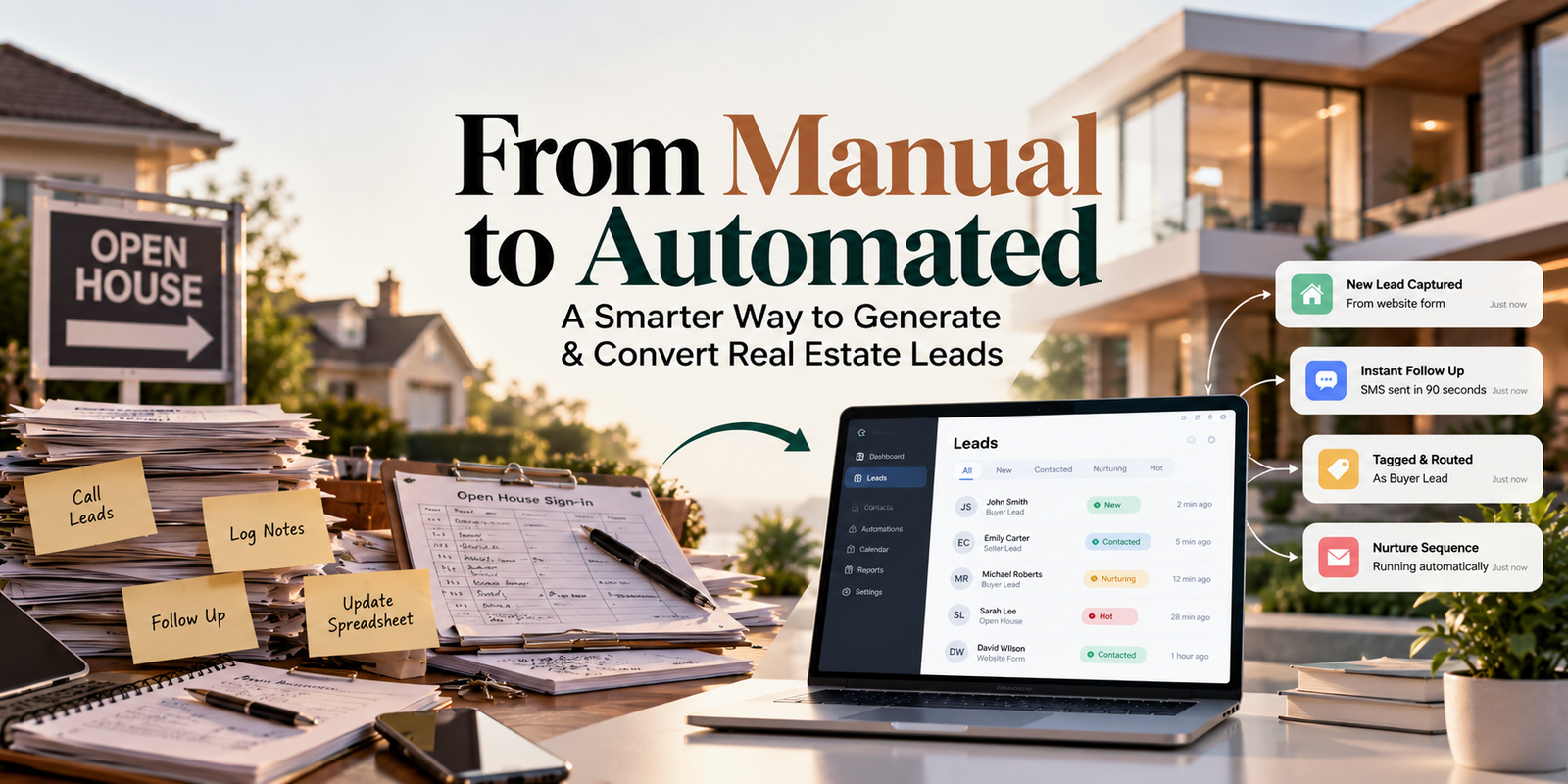
Best Lead Generation for Realtors: Go Automated
You already know where the time goes. You are calling leads who won’t pick up, logging notes into a spreadsheet, manually texting people who filled out a form three days ago, and wondering which open house sign-in actually turned into a conversation worth having. That is not a prospecting problem. That is a process problem.…

Best Lead Generation for Realtors: Solo Agent Checklist
Most lead generation platforms are built to impress on a sales call. They talk about lead volume, market coverage, and proprietary data. What they do not tell you upfront is whether those leads are shared with four other agents, whether you need a separate CRM to do anything useful with them, or what the total…
Stop Reading. Start Shipping.
You didn't start a business to run a team. Hire your first AI Worker instead.